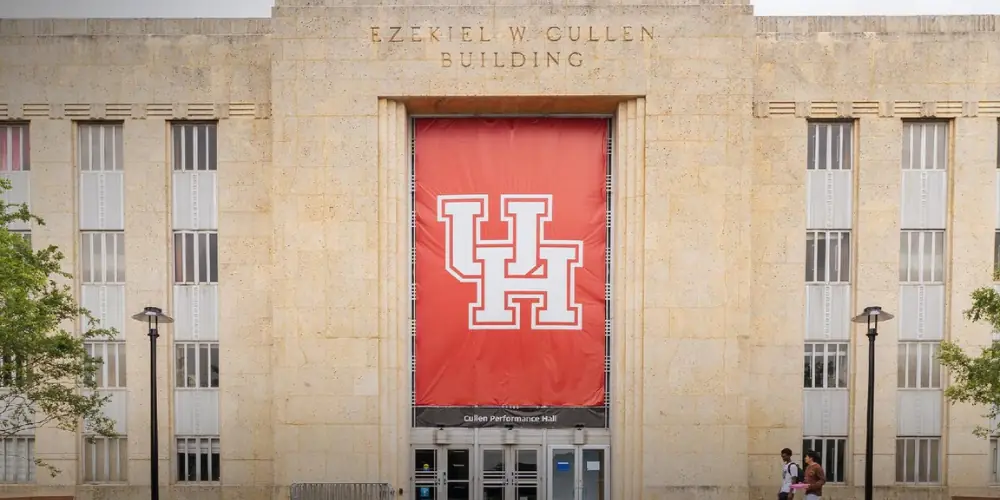
The University of Houston is reviewing its core curriculum after a new Texas law required public universities to examine their course offerings. The proposed changes could remove nearly 40% of the university’s core classes. If approved, students will have fewer options to meet graduation requirements.
The review has attracted attention across Texas. Several courses on gender, LGBTQ+ topics, and climate change appear on the list for removal. Faculty members have also questioned the review process and its impact on students.
The Texas Legislature passed Senate Bill 37 in 2025. Republican lawmakers said the measure would address what they viewed as “left-wing indoctrination” in public universities.
The law requires universities to keep only “foundational” and “necessary” courses in the core curriculum. Lawmakers said these classes should prepare students for future careers. As a result, every public university in Texas started reviewing its core curriculum.
Several universities have already changed their course lists. Many reduced classes that focus on race, gender, or LGBTQ+ topics.
University of Houston’s Proposed Changes

According to a document first reported by the Houston Chronicle, the University of Houston’s Core Curriculum Working Group met several times to evaluate courses under Senate Bill 37. The group created two recommendations: one identifying courses that should remain in the core curriculum and another listing courses recommended for removal.
Among the courses proposed for removal from the core are “Introduction to Women’s Studies,” “Introduction to LGBT Studies,” and “Intro to Global Climate Change.” Although these classes could still be offered by the university, they would no longer satisfy core curriculum requirements for most undergraduate degree programs.
At the same time, several ethnic studies courses would continue as core options. These include “Intro to African American Studies,” “Introduction to Asia American Studies,” and “Introduction to Latino Cultural Studies.” History and government courses covering Black and Latino American history, along with selected women’s history courses, would also remain.
Fewer Choices for Undergraduate Students
Faculty members believe the proposal will reduce the number of classes available to undergraduate students.
Richard Armstrong, an associate professor of classical studies, has taught at the University of Houston for 30 years. He said the core curriculum introduces students to subjects they might never choose on their own. Those classes often help students discover new interests while building useful skills.
“They really do light up and realize that they have interests and aptitudes beyond their vocational interests that actually do synergize with the skills that they’re trying to develop,” Armstrong told the Houston Chronicle.
Faculty members also worry that fewer core classes could reduce enrollment in several departments. Lower enrollment could eventually lead to discussions about deeper academic cuts.
Faculty Question the Review Process
The review has also raised concerns about transparency.
Earlier this year, the University of Houston asked hundreds of professors to sign a memo. The memo stated they would not “indoctrinate” students. Soon after, the university started its official review under Senate Bill 37.
Provost Diane Chase later sent a faculty feedback form. Armstrong said many professors still felt the process lacked openness. He also said faculty members had little notice before the review began.
“Suddenly, over the summer, they’re basically DOGE-ing the core curriculum in a way that doesn’t really make much sense,” Armstrong said. “We do have the option to appeal, which we have, but it’s not clear who’s getting the appeal, who will decide it.”
Faculty members continue to question how the university will review those appeals before making final decisions.
Houston’s Diversity Shapes the Discussion
Houston ranks among the most diverse cities in the United States. Armstrong believes the university’s curriculum should reflect that diversity.
He pointed to women’s studies, gender studies, and LGBTQ+ courses as examples. He said these classes connect with students from many backgrounds and reflect Houston’s diverse communities.

“Good friends of mine teach those women’s studies, gender studies, LGBTQ courses; they innovated a curriculum that really speaks to Houstonians,” Armstrong said. “Removing it from the core just means it will have to stand on its own.”
Supporters of these courses believe they help students explore new ideas outside their major. They also believe the classes strengthen cultural understanding and critical thinking.
Courses Designed to Keep Students Engaged
Armstrong also highlighted one classical studies course recommended for removal from the core, “From Homer to Hollywood.”
The course introduces students to classic works such as “The Odyssey” and “The Iliad” while examining their influence on modern films. Students also study film economics, textual interpretation, and oral storytelling traditions through contemporary adaptations.
According to Armstrong, courses like this were intentionally designed to keep students interested while developing analytical and communication skills.
“We work really hard to provide these things because we know students need to be engaged,” Armstrong said. “We don’t want to make generic core classes, because no one wants to teach that, especially if you have a large enrollment in the class. You don’t wanna go and look at 100 people who are bored out of their minds.”
Ongoing Debate Over Higher Education
The University of Houston has not finalized the recommendations. Even so, the review has added to a larger discussion about higher education in Texas.
Armstrong believes future political changes could force universities to revise the curriculum again. He questioned whether such broad changes are necessary.
“When the political climate changes, we’re gonna have to fix it all,” he said. “So let’s just be real for a moment and say, ‘What is it that we are afraid of that requires us to do this so severely?'”
The University of Houston continues to evaluate its core curriculum under Senate Bill 37. The final decision could reshape course options for students and influence future academic planning across Texas public universities.